Why a Heat Pump Can Deliver More Heat Than It Uses
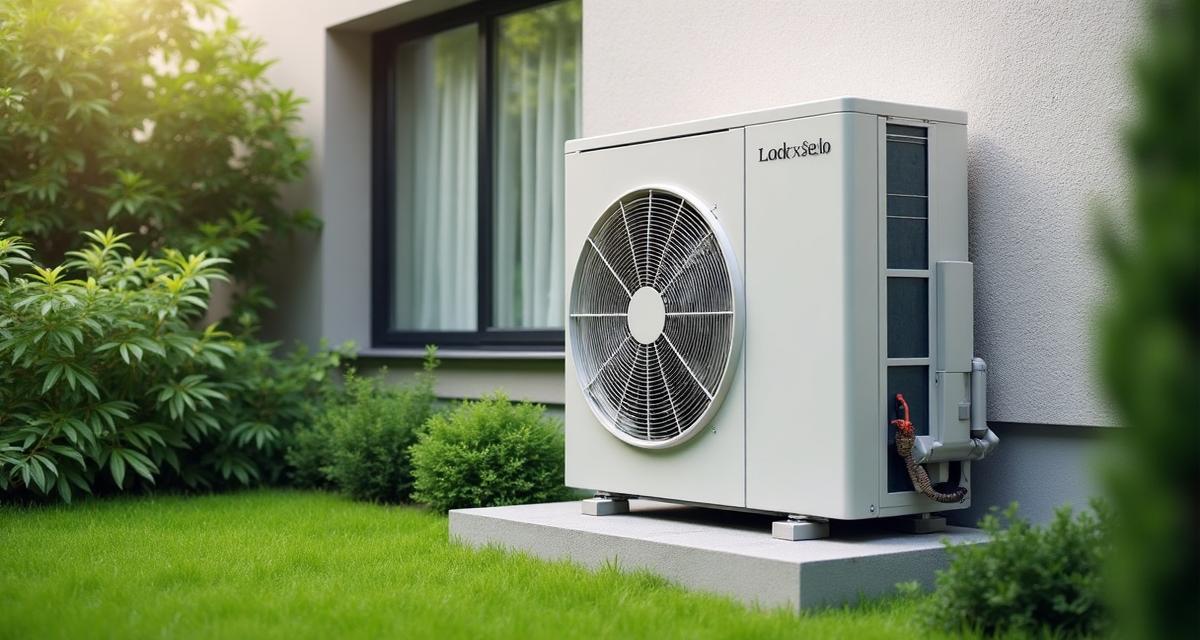
A heat pump uses electricity to move heat from outside air, the ground or water into the home, rather than turning electricity directly into heat. The heat delivered is the electricity used plus the heat taken from the source, so delivered heat can exceed electricity input without breaking energy conservation. A resistance heater, by contrast, delivers 1 kWh of heat for each 1 kWh of electricity.
The Basic Relationship — Illustrative
What Is COP (Coefficient of Performance)?
COP is the ratio of heat output to electrical input at a particular operating point — an instantaneous or steady-state figure. A COP only means something together with the conditions it was measured at.
COP — Illustrative Example
Test and Rating Conditions
In Europe, COP and heating capacity are measured under the test conditions of the EN 14511 standard series. Datasheets state the conditions in a short code giving the source and sink temperatures:
- A7/W35 — outdoor air (A) at 7 °C, water (W) delivered at 35 °C.
- A2/W35, A−7/W35 — the same at colder air temperatures.
- A7/W55 — warmer air but hotter water, as for radiators.
- B0/W35 — brine (B) at 0 °C from a ground loop, water at 35 °C.
- W10/W35 — water source at 10 °C.
A COP quoted without its code cannot be compared with another. When comparing models, use the same conditions for each, and check whether the figure is at full or part load.
Source and Sink Temperatures: the Temperature Lift
The source is where heat is taken from (outdoor air, ground, water); the sink is where it is delivered (the heating water or indoor air). A heat pump works harder the bigger the temperature lift between them, so COP falls as the lift grows.
Physics sets an upper limit — the Carnot COP — that no real machine reaches but which shows the direction of the effect. Temperatures must be in kelvin (°C + 273.15).
Theoretical Limit — Why Lift Matters
Outdoor Temperature
For an air-source heat pump, colder outdoor air means a bigger lift and a lower COP — and it is exactly when heat demand is highest. Heating capacity (kW of heat the unit can deliver) usually also falls as outdoor air gets colder, which is why sizing uses a design outdoor temperature for your location.
Ground and water sources usually vary less through the year than outdoor air, so their COP varies less with the season. How much less depends on the ground loop or water source design.
Flow Temperature and Emitters
The flow temperature is the temperature of the water sent to radiators or underfloor loops. The higher it needs to be to keep rooms warm, the larger the lift and the lower the COP.
Flow temperature is set by the home and the heating system, not by the heat pump alone:
- Heat loss — a better-insulated home needs less heat, so emitters can run cooler.
- Emitter size — underfloor heating and larger radiators deliver the same heat at a lower water temperature.
- Weather compensation — a control that lowers the flow temperature in milder weather instead of running at one fixed temperature.
Domestic hot water is usually heated to a higher temperature than space heating, so the hot-water part of a heat pump's operation generally runs at a lower COP.
Defrost
When outdoor air is near or below freezing and humid, frost forms on the outdoor coil and blocks airflow. The heat pump periodically defrosts it, usually by briefly reversing the cycle, which uses energy and pauses heat delivery. How often this happens depends on weather and controls. Steady-state COP tests at mild conditions may not capture it; seasonal calculations and field measurement do.
Auxiliary Electricity and Backup Heat
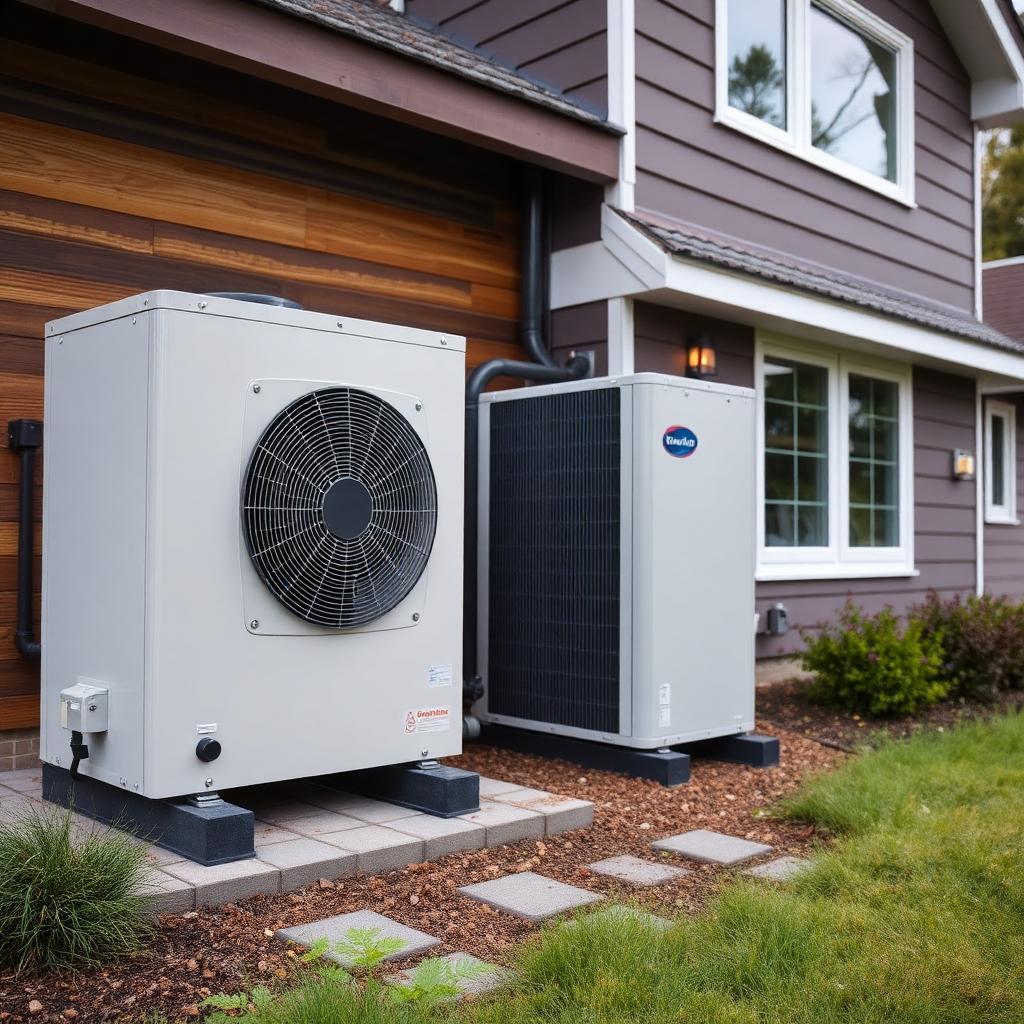
A heat pump system uses electricity beyond the compressor:
- circulation pumps and fans;
- controls and standby;
- crankcase or sump heaters in some outdoor units;
- a backup resistance heater, which may run in very cold weather, during defrost, or for hot-water disinfection cycles.
Backup resistance heat delivers about 1 kWh of heat per kWh, so the more of the year's heat it supplies, the lower the overall seasonal figure. Whether these loads are inside a quoted figure depends on the system boundary. The European SEPEMO-Build project defined boundaries H1 to H4 for seasonal performance factor (SPF) measurements, from the heat pump alone (H1) to the whole system including backup heater and distribution pumps (H4). When you compare a measured or quoted figure, ask which boundary it uses.
What Is SCOP (Seasonal COP)?
SCOP is the seasonal figure: heat delivered over a heating season divided by electricity used. In the EU, ecodesign Regulation (EU) No 813/2013 defines SCOP as the ratio of the reference annual heating demand to the annual energy consumption for heating, calculated for a reference heating season. The calculation method combines COP measured at several part-load test points with a temperature distribution for the season, and is set out in the EN 14825 standard.
Key features of the rating:
- Reference climates — the regulation defines "average", "colder" and "warmer" heating seasons, so one model can have a different SCOP for each.
- Temperature application — low-temperature (35 °C) and medium-temperature (55 °C) applications are rated separately.
- Energy label — the label shows seasonal space heating energy efficiency (ηs) as a percentage. The regulation derives ηs from SCOP by dividing by a primary-energy conversion coefficient (CC = 2.5) and subtracting correction terms, so ηs and SCOP are not the same number and should not be compared directly.
HSPF and Other Rating Systems
In North America, seasonal heating performance is usually given as HSPF, and since 2023 as HSPF2 under an updated US Department of Energy test procedure. HSPF is expressed in Btu of heat per watt-hour of electricity and uses a different test procedure and climate assumption, so it cannot be converted into a European SCOP with a simple factor. Compare models only within the same rating system.
Catalogue Figures vs Real Household Performance
A catalogue COP or SCOP is a standardised test result. Your home's seasonal performance can differ because:
- your climate differs from the reference season;
- your actual flow temperature may be higher than the rated application, for example if radiators are undersized or controls run hotter than needed;
- hot water is included in real operation but not in a space-heating SCOP;
- cycling, defrost, backup heat and auxiliary loads depend on the installation;
- sizing and commissioning affect how often the unit runs at efficient part load.
None of this makes ratings useless: they are the fair way to compare models under the same conditions. To estimate your own home, start from the rating closest to your climate and flow temperature, and treat the installer's design figure as an estimate to check later against measured data.
How to Find the Right Figure for Your Heat Pump
- Find the product datasheet or label for the exact model, not the product range.
- Pick the seasonal value for your climate if more than one is listed.
- Pick the temperature application closest to your heating system — 35 °C for underfloor heating or large low-temperature radiators, 55 °C if your system needs hotter water.
- Ask your installer what seasonal performance they expect at your design flow temperature, how they estimated it, and which system boundary it uses.
- For an existing installation with heat and electricity metering, a measured year of heat delivered ÷ electricity used is better than any rating, because it reflects your home, settings and weather.
Turning SCOP Into Electricity Use
Electricity used over a year is the heat the home needs divided by the seasonal performance. The heat demand comes from your bills (fuel used × current boiler efficiency) or an installer's heat-loss calculation; if your bills are in therms or MJ, convert them with therms to kWh or MJ to kWh.
Annual Electricity — Illustrative Example
Heat Output Ratings in kW and BTU/h
Heat output (capacity) is a different number from efficiency. Capacity is given in kW, or in BTU/h in some markets; use the BTU/h to watts converter to compare them. Capacity changes with outdoor and flow temperature, so check that the unit's output at your design outdoor temperature covers the home's calculated heat loss. Sizing should be based on a heat-loss calculation for the home, not floor area alone.
Next Question: Will It Cost Less to Run?
Efficiency alone does not answer the cost question: that also needs your current system's efficiency, both fuel prices, the installation cost and your heat demand. The heat pump savings and payback guide covers that comparison, and the Heat Pump Savings Calculator runs it with your own inputs. The methodology page documents the formulas, and the Heat Pumps hub collects the related tools and guides.
❓Frequently Asked Questions
Related energy tools & guides
Part of the Heat Pumps hub — explore the connected calculators, guides and topics.
Free calculator — Heat Pumps
Heat Pump Savings Calculator
Compare annual running cost, payback and CO₂ reduction versus your current gas, oil, LPG or electric heating.
Open calculator