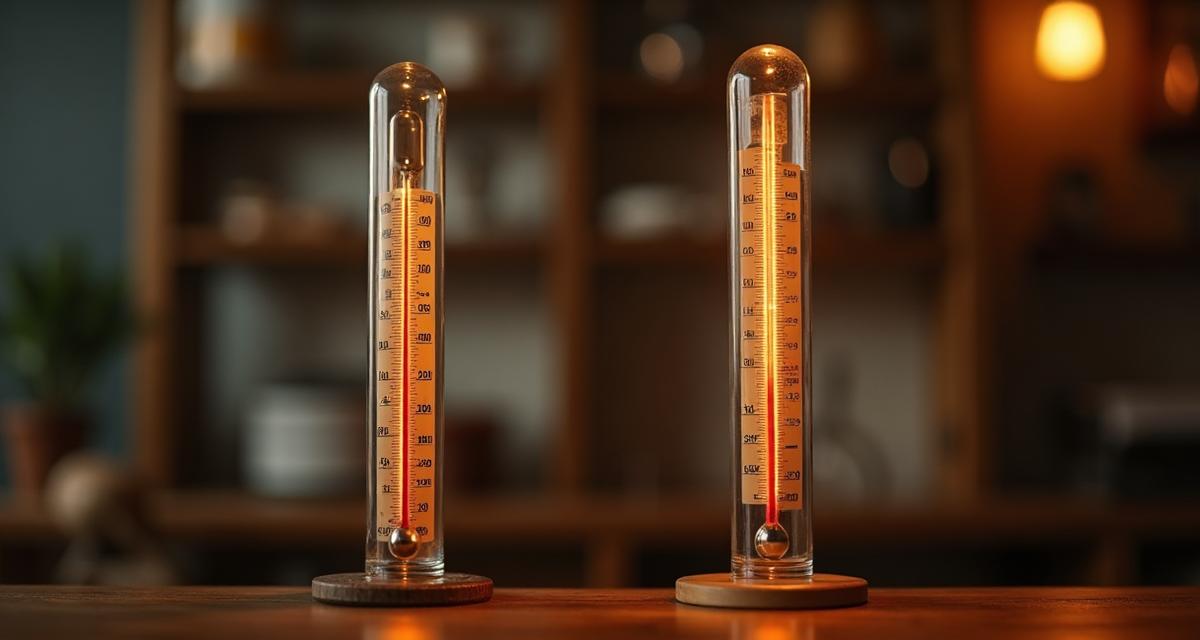
The Challenge of Measuring Temperature
For most of human history, temperature was purely subjective. Something was hot, warm, cool, or cold based on how it felt. The development of thermometers and temperature scales transformed temperature from a qualitative sensation into a precise measurement.
Daniel Fahrenheit and His Curious Scale
Daniel Gabriel Fahrenheit was a German physicist working in the Netherlands. In 1724, he introduced the scale that bears his name. He set 0°F as the temperature of a mixture of ice, water, and ammonium chloride, and 96°F as human body temperature.
Water freezes at 32°F and boils at 212°F—a span of 180 degrees. Fahrenheit wanted to avoid negative numbers in everyday weather measurement.
Fahrenheit Fun Fact
Try the Calculator
Use our free Celsius to Fahrenheit converter for instant, accurate results.
🌡️Convert °C → °FAnders Celsius and Scientific Simplicity
Anders Celsius was a Swedish astronomer who proposed his temperature scale in 1742. His approach was based on water: 0°C is freezing and 100°C is boiling. The 100-degree span made calculations simple and fit perfectly with the metric system.
Lord Kelvin and Absolute Zero
William Thomson (Lord Kelvin) proposed an absolute temperature scale in 1848 based on absolute zero—the point where all molecular motion ceases. Absolute zero is -273.15°C or -459.67°F. The Kelvin scale is essential for scientific calculations.
Temperature Scale Relationships
Comparing the Three Major Scales
Fahrenheit remains popular in the US for everyday use. Celsius dominates most of the world and scientific work. Kelvin is the standard for physics and chemistry.
| Reference Point | Fahrenheit | Celsius | Kelvin |
|---|---|---|---|
| Absolute Zero | -459.67°F | -273.15°C | 0 K |
| Water Freezes | 32°F | 0°C | 273.15 K |
| Body Temperature | 98.6°F | 37°C | 310.15 K |
| Water Boils | 212°F | 100°C | 373.15 K |