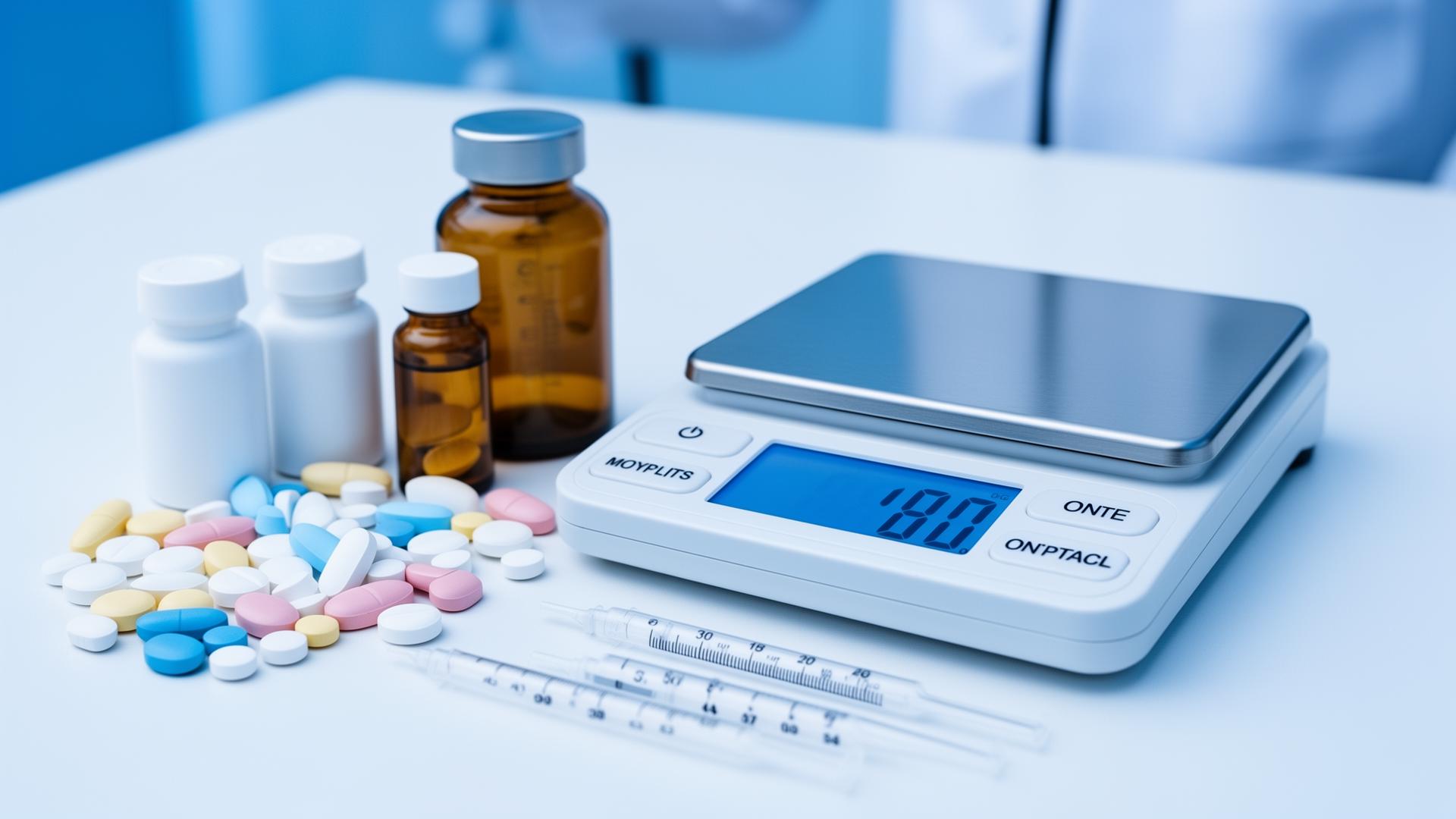
Why Pharmaceutical Conversions Matter
Medication errors related to incorrect dosing are among the most common and preventable medical mistakes. A simple confusion between micrograms and milligrams represents a 1,000-fold difference, which can be the difference between an effective dose and a fatal overdose. This is not theoretical: medication errors cause an estimated 7,000 to 9,000 deaths annually in the United States alone.
Understanding pharmaceutical weight conversions is essential for anyone who handles medications. Healthcare workers calculate doses daily, but patients and caregivers also need this knowledge to verify prescriptions, understand labels, and safely administer medications at home. This guide will give you the foundational knowledge to handle these conversions confidently.
Understanding Pharmaceutical Weight Units
Pharmaceutical dosing uses the metric system, with three primary units you will encounter most frequently. The gram (g) is the base unit of mass in the metric system. One gram is roughly the weight of a paperclip or a small sugar cube. Most medications are measured in smaller fractions of a gram.
The milligram (mg) equals one-thousandth of a gram (0.001 g or 1/1000 g). This is the most common unit for oral medications like tablets and capsules. A typical aspirin tablet contains 325 mg of active ingredient.
The microgram (mcg or μg) equals one-millionth of a gram (0.000001 g or 1/1,000,000 g). This extremely small unit is used for highly potent medications where even tiny amounts produce significant effects, such as thyroid hormones, some vitamins, and certain heart medications.
Critical Abbreviation Note
Try the Calculator
Use our free Micrograms to Milligrams converter for instant, accurate results.
💊Convert mcg → mgHow These Units Relate to Each Other
The metric system makes conversions straightforward because each unit differs by a factor of 1,000. Moving from a larger unit to a smaller unit means multiplying by 1,000. Moving from a smaller unit to a larger unit means dividing by 1,000.
One gram equals 1,000 milligrams. One milligram equals 1,000 micrograms. Therefore, one gram equals 1,000,000 micrograms. These relationships form the foundation of all pharmaceutical dose calculations.
| From | To | Operation | Example |
|---|---|---|---|
| Grams (g) | Milligrams (mg) | Multiply by 1,000 | 0.5 g = 500 mg |
| Milligrams (mg) | Grams (g) | Divide by 1,000 | 250 mg = 0.25 g |
| Milligrams (mg) | Micrograms (mcg) | Multiply by 1,000 | 0.1 mg = 100 mcg |
| Micrograms (mcg) | Milligrams (mg) | Divide by 1,000 | 500 mcg = 0.5 mg |
| Grams (g) | Micrograms (mcg) | Multiply by 1,000,000 | 0.001 g = 1,000 mcg |
Step-by-Step Conversion Methods
Converting between pharmaceutical units follows a simple pattern. To convert micrograms to milligrams, divide by 1,000. For example, 250 mcg divided by 1,000 equals 0.25 mg. To convert milligrams to micrograms, multiply by 1,000. For example, 0.125 mg multiplied by 1,000 equals 125 mcg.
A helpful technique is to move the decimal point. When converting mcg to mg, move the decimal three places to the left. When converting mg to mcg, move the decimal three places to the right. For instance, 75 mcg becomes 0.075 mg by moving the decimal left three places.
Quick Conversion Formulas
🧮Quick Calculator
1 mcg = 0 mg
Common Medications and Their Dosing Units
Different medications use different units based on their potency. Understanding which unit is typical for each medication helps you spot potential errors. Medications dosed in grams are relatively rare and usually include bulk supplements or certain antibiotics given intravenously.
Milligram dosing is the most common for tablets and capsules. Examples include ibuprofen (200-800 mg), metformin (500-1000 mg), and amoxicillin (250-500 mg). These are medications where therapeutic doses are measured in hundreds of milligrams.
Microgram dosing indicates highly potent medications. Examples include levothyroxine (25-200 mcg), folic acid (400-800 mcg), vitamin B12 (100-1000 mcg), and digoxin (125-250 mcg). With these medications, small changes in dose can significantly affect outcomes.
Red Flag for Errors
Real-World Conversion Examples
Let us work through some practical scenarios you might encounter. Scenario one: A prescription calls for 0.5 mg of a medication, but your tablets are labeled in mcg. To convert 0.5 mg to mcg, multiply by 1,000. The answer is 500 mcg, so you need a 500 mcg tablet.
Scenario two: Your vitamin supplement contains 1,000 mcg of B12, and you want to know how many milligrams that is. Divide 1,000 mcg by 1,000 to get 1 mg. Scenario three: A child needs 7.5 mg of medication per kg of body weight. If the child weighs 20 kg, the total dose is 7.5 mg times 20, which equals 150 mg.
Scenario four: You need to split a 1 g powder into 250 mg doses. First, convert 1 g to mg by multiplying by 1,000, giving you 1,000 mg. Then divide by 250 mg per dose to find you can make 4 doses from the powder.
Liquid Medication Concentrations
Liquid medications add another layer of complexity because they combine weight and volume measurements. A liquid medication might be labeled as 250 mg per 5 mL, meaning every 5 milliliters of liquid contains 250 milligrams of active ingredient.
To calculate doses for liquids, you need to determine how much volume contains your required dose. If a patient needs 500 mg and the concentration is 250 mg per 5 mL, you would give 10 mL. The calculation is: desired dose divided by concentration, then multiplied by volume. In this case: 500 mg divided by 250 mg, times 5 mL equals 10 mL.
Concentrated pediatric drops often use mcg per mL. For example, vitamin D drops might contain 400 IU (10 mcg) per drop. Always verify the concentration and measure carefully using the provided dropper or oral syringe.
Preventing Medication Dosing Errors
Several strategies can help prevent dangerous dosing errors. Always double-check units when reading prescriptions or labels. Pay attention to whether the dose is in mcg, mg, or g. If the unit seems wrong for that medication, ask a pharmacist before proceeding.
Use leading zeros for doses less than one. Write 0.5 mg, not .5 mg, to prevent misreading as 5 mg. Never use trailing zeros. Write 5 mg, not 5.0 mg, to prevent misreading as 50 mg. These conventions are standard in healthcare to prevent decimal point errors.
When in doubt, verify. If a calculated dose seems unusually large or small, recalculate and consult references. Most medications have expected dose ranges, and doses far outside these ranges should trigger additional verification.