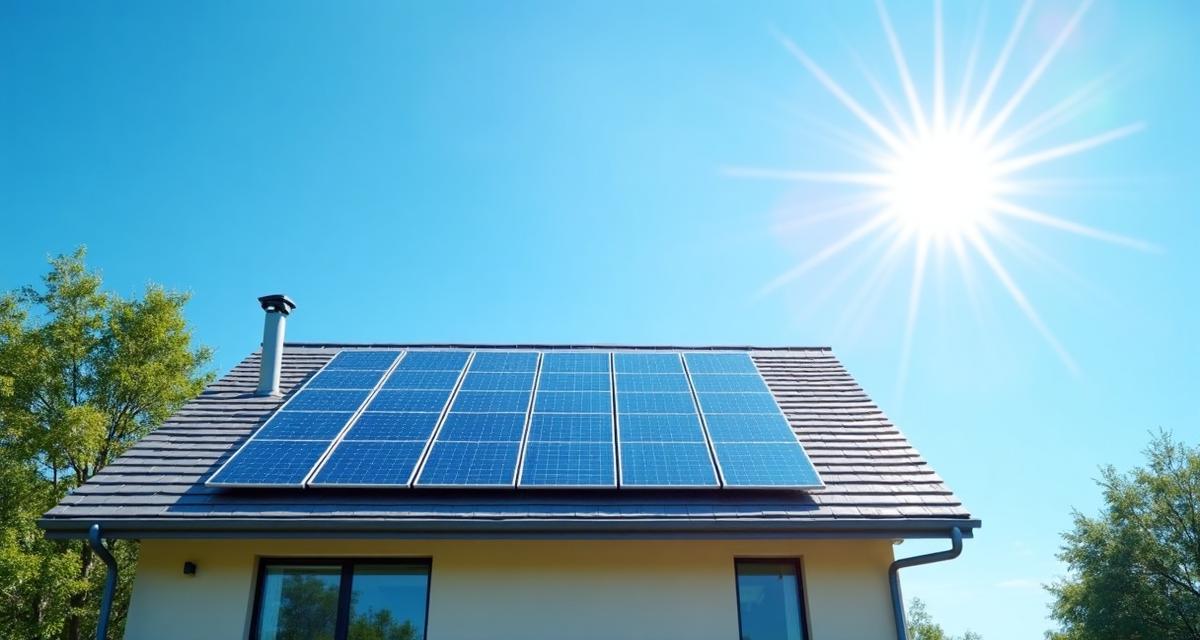
Understanding Solar Panel Ratings
Solar panels are rated in watts (W) at Standard Test Conditions (STC). A typical residential panel today produces 400-450W. However, real-world output depends on sunlight hours, weather, panel orientation, and system efficiency.
How to Calculate Annual Solar Output
The basic formula multiplies your system size by peak sun hours and a performance factor.
Solar Output Formula
Solar Panel Output Calculator
Calculate your expected annual production by multiplying your system size (kWp) by peak sun hours (PSH) and days per year. Formula: Annual kWh = System kWp × PSH × 365 × 0.85 (accounting for system losses). A 5 kWp system in a location with 4 PSH produces approximately: 5 × 4 × 365 × 0.85 ≈ 6,205 kWh/year.
Try the Calculator
Use our free Fahrenheit to Celsius converter for instant, accurate results.
🌡️Convert °F → °CPeak Sun Hours by Location
Peak Sun Hours (PSH) vary significantly by geography:
| Location | Annual PSH | Factor | kWh per kW installed |
|---|---|---|---|
| Northern Norway | 700-900 | 0.8 | 560-720 |
| Oslo, Norway | 900-1,000 | 0.9 | 810-900 |
| London, UK | 900-1,000 | 0.9 | 810-900 |
| Berlin, Germany | 950-1,050 | 0.95 | 900-1,000 |
| Paris, France | 1,000-1,150 | 1.0 | 1,000-1,150 |
| Madrid, Spain | 1,400-1,600 | 1.4 | 1,400-1,600 |
| Los Angeles, USA | 1,500-1,700 | 1.5 | 1,500-1,700 |
| Sydney, Australia | 1,400-1,600 | 1.4 | 1,400-1,600 |
How Many Solar Panels Do You Need?
To size your system, divide your annual electricity consumption by expected output per kW.
System Sizing Formula

Roof Space Requirements
Modern solar panels need approximately 1.7-2.0 m² per panel:
| System Size | Number of Panels* | Roof Space Needed |
|---|---|---|
| 3 kW | 7-8 | 12-16 m² |
| 5 kW | 11-13 | 19-26 m² |
| 6 kW | 13-15 | 23-30 m² |
| 8 kW | 18-20 | 31-40 m² |
| 10 kW | 22-25 | 38-50 m² |
How to Calculate Solar Savings
Your savings depend on electricity prices and self-consumption rate. Formula: Annual Savings = (kWh produced × self-consumption rate × electricity price) + (kWh exported × feed-in tariff). With a 5 kWp system producing 5,000 kWh/year, 30% self-consumption at €0.30/kWh, and 70% export at €0.08/kWh: (5,000 × 0.3 × 0.30) + (5,000 × 0.7 × 0.08) = €450 + €280 = €730/year.
Solar Panel Payback Period
Calculate how quickly your solar investment pays for itself:
Payback Calculation
Factors That Affect Solar Panel Output
Several factors can reduce your actual output below theoretical maximums:
Output Reduction Factors
Environmental Impact of Solar
Solar energy significantly reduces your carbon footprint. Each kWh of solar power avoids approximately 0.4-0.5 kg of CO₂ emissions compared to fossil fuel generation. A typical 5 kWp system producing 5,000 kWh/year saves about 2,000-2,500 kg of CO₂ annually—equivalent to driving 10,000 km less in a petrol car.
CO₂ Savings by System Size
Annual CO₂ avoided compared to average grid electricity:
| System Size | Annual Output | CO₂ Avoided | Equivalent Trees |
|---|---|---|---|
| 3 kW | 3,600 kWh | 1.5 tonnes | 70 trees |
| 5 kW | 6,000 kWh | 2.5 tonnes | 120 trees |
| 6 kW | 7,200 kWh | 3.0 tonnes | 145 trees |
| 10 kW | 12,000 kWh | 5.0 tonnes | 240 trees |
❓Frequently Asked Questions
Related energy tools & guides
Part of the Solar Energy hub — explore the connected calculators, guides and topics.
Free calculator — Solar Energy
Solar Payback Calculator
Project year-1 savings, simple payback, 25-year lifetime return, LCOE and CO₂ avoided — with editable yield, self-consumption and price inflation.
Open calculator