📏Length & Distance

How to Convert Inches to Feet (and Back): The Complete Guide

Inches and feet are the two most-used length units in the United States and UK. Whether you are measuring room dimensions, checking your height, or reading construction blueprints, converting between them is a daily task. This guide covers the formula, a complete reference chart, common mistakes, and practical examples so you never have to guess again.

15 min read
February 18, 2026
Updated: Feb 18, 2026
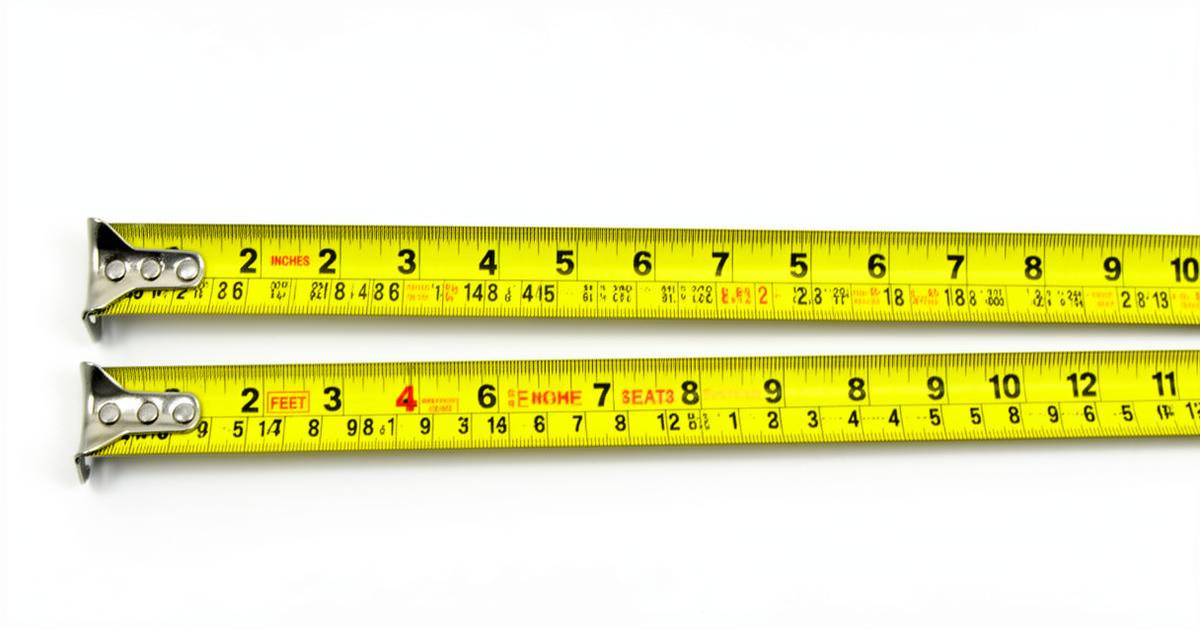
Two imperial tape measures side by side showing inches and feet markings
Inches and feet are both part of the imperial measurement system, with exactly 12 inches in every foot.

The Inches to Feet Formula

The relationship between inches and feet is fixed: there are exactly 12 inches in one foot. That single fact is all you need.

To convert inches to feet, divide the number of inches by 12:

Feet = Inches ÷ 12

To convert feet back to inches, multiply by 12:

Inches = Feet × 12

For example, 36 inches ÷ 12 = 3 feet. And 5 feet × 12 = 60 inches. The arithmetic is straightforward — the most common challenge is expressing the result correctly when the division does not come out even, which is why most people prefer to write the remainder as a fraction of a foot or convert it back to inches.

Conversion Formulas

Inches → Feet: divide by 12 Feet → Inches: multiply by 12 Example: 54 in ÷ 12 = 4.5 ft (= 4 ft 6 in)

🧮Quick Calculator

1 in = 0 ft

Step-by-Step: How to Do the Conversion by Hand

Converting inches to feet by hand takes three steps:

Step 1 — Divide by 12. Take your inch value and divide it by 12. The whole number part of the result is the number of complete feet.

Step 2 — Find the remaining inches. Multiply the decimal part of the result by 12 to get the leftover inches. For example, 58 ÷ 12 = 4.833…. The decimal is 0.833, so 0.833 × 12 = 10 remaining inches.

Step 3 — Write the answer. Combine both parts: 58 inches = 4 feet 10 inches (written 4′ 10″).

A quicker mental shortcut: for every 12 inches, count one foot. So 24 inches = 2 ft, 36 = 3 ft, 48 = 4 ft, 60 = 5 ft, 72 = 6 ft. Memorising these multiples of 12 covers the vast majority of everyday needs.

Mental Shortcut

Memorise the multiples of 12 up to 10 feet: 12, 24, 36, 48, 60, 72, 84, 96, 108, 120. Any number in between uses these as anchor points.

Inches to Feet Reference Chart (1–120 inches)

Use this quick-reference table for the most common inch values. The "ft + in" column shows the result in the traditional feet-and-inches format, while "decimal ft" gives the exact decimal equivalent useful in calculations.

InchesFeet + InchesDecimal Feet
1 in0 ft 1 in0.083 ft
6 in0 ft 6 in0.5 ft
12 in1 ft 0 in1.000 ft
18 in1 ft 6 in1.5 ft
24 in2 ft 0 in2.000 ft
30 in2 ft 6 in2.5 ft
36 in3 ft 0 in3.000 ft
42 in3 ft 6 in3.5 ft
48 in4 ft 0 in4.000 ft
54 in4 ft 6 in4.5 ft
60 in5 ft 0 in5.000 ft
66 in5 ft 6 in5.5 ft
72 in6 ft 0 in6.000 ft
78 in6 ft 6 in6.5 ft
84 in7 ft 0 in7.000 ft
96 in8 ft 0 in8.000 ft
108 in9 ft 0 in9.000 ft
120 in10 ft 0 in10.000 ft

Try the Calculator

Use our free Inches to Feet converter for instant, accurate results.

📏Convert inft

Feet to Inches: The Reverse Conversion

Converting feet back to inches is even simpler — just multiply by 12. This direction is equally common in practice.

For mixed measurements (feet and inches together), convert the feet portion first, then add the extra inches. For example, 5 feet 9 inches: 5 × 12 = 60, then 60 + 9 = 69 inches total.

This reverse path is critical in construction and carpentry where dimensions are given in feet but cuts are made in inches. A 6-foot board is 72 inches; a 2-foot-6-inch shelf is 30 inches; a standard 8-foot ceiling is 96 inches.

Feet + Inches → Total Inches

Total inches = (feet × 12) + remaining inches Example: 6 ft 3 in = (6 × 12) + 3 = 72 + 3 = 75 inches

🧮Quick Calculator

1 ft = 0 in

Real-World Examples by Category

Knowing when you will actually need this conversion makes the formula stick better. Here are the most common scenarios:

Human height — Height is the single most searched use case. In the US and UK, people state height in feet and inches (e.g. 5′ 11″), but medical forms, sports databases, and fitness apps sometimes ask for total inches. A person who is 5′ 11″ is 71 inches tall (5 × 12 + 11).

Room dimensions and flooring — Floor plans typically show room sizes in feet, but when buying flooring tiles measured in inches, you need both units. A 12-foot wall = 144 inches, which tells you how many 12-inch tiles you need in a row.

Furniture and appliances — Furniture dimensions are often listed in inches online but described in feet in showrooms. A 72-inch sofa is a 6-foot sofa. A 24-inch dishwasher fits a 2-foot cabinet opening.

Screen sizes — TV and monitor sizes are measured diagonally in inches. A 55-inch TV has a diagonal of 4 feet 7 inches — useful for visualising scale in a room.

Fabric and textiles — Fabric is sold by the yard, but patterns reference inches. Since 1 yard = 36 inches = 3 feet, knowing your inch-to-foot conversions helps you estimate how many yards of material you need.

ScenarioInchesFeet + Inches
Average male height (US)69 in5 ft 9 in
Standard door height80 in6 ft 8 in
Standard ceiling height96 in8 ft 0 in
Standard kitchen counter36 in3 ft 0 in
Twin bed length75 in6 ft 3 in
King bed width76 in6 ft 4 in
55-inch TV diagonal55 in4 ft 7 in
Standard bathtub length60 in5 ft 0 in

Common Mistakes to Avoid

Confusing decimal feet with feet-and-inches is the most frequent error. If your calculator says 5.5 feet, that is NOT 5 feet 5 inches — it is 5 feet 6 inches. The decimal 0.5 represents half a foot (6 inches), not 5 inches. Always multiply the decimal portion by 12 to get the remaining inches.

A related mistake occurs with remainders. If you get 4.75 feet, the remaining 0.75 × 12 = 9 inches, giving you 4 feet 9 inches — not 4 feet 7.5 inches.

Another common error: forgetting that the prime symbol ′ means feet and the double prime ″ means inches. Writing 6′ 2″ is correct; writing 6″ 2′ means 6 inches 2 feet, which makes no sense.

Decimal Feet ≠ Feet and Inches

5.5 ft = 5 ft 6 in (not 5 ft 5 in) 4.75 ft = 4 ft 9 in (not 4 ft 7.5 in) Always multiply the decimal by 12 to get the remaining inches.
Construction worker measuring a door frame with a tape measure in feet and inches
Construction and home improvement are among the most common real-world uses for inches-to-feet conversions.

Notation: How to Write Feet and Inches Correctly

Feet and inches have standardised notation that appears in construction drawings, sports records, and everyday writing:

′ (prime) = feet. This is a single straight apostrophe-like mark, not a curly quote. ″ (double prime) = inches. Two straight marks, not a standard quotation mark.

So 6 feet 2 inches is written: 6′ 2″

In informal contexts you will also see: 6 ft 2 in, or even 6-2 in sports commentary. All are understood in context. Scientific and engineering work typically uses decimal feet or converts everything to inches to avoid ambiguity.

In product specifications, "6×4 room" almost always means 6 feet by 4 feet, not inches. When working with international suppliers or architects, always clarify the unit — a 6×4 table in millimetres is very different from 6×4 feet.

Why 12? The History Behind the Foot

The foot has been a unit of measure in almost every ancient civilisation, always defined as a human foot length — typically between 11 and 13 inches depending on the culture. The Romans standardised it at 12 unciae (ounces), giving us the word "inch" (from uncia) and the number 12.

Twelve is a highly practical number: it divides evenly by 2, 3, 4, and 6, making fractions easy without calculators. Half a foot is 6 inches. A third of a foot is 4 inches. A quarter of a foot is 3 inches. These clean fractions made construction and trade straightforward long before decimal arithmetic was common.

The British Imperial System formally standardised the foot as exactly 12 inches in the Weights and Measures Act of 1824. The international foot was defined as exactly 0.3048 metres in 1959, a definition still in use today.

Key Fact

1 international foot = 0.3048 metres exactly (defined 1959) 1 inch = 2.54 cm exactly 12 inches = 1 foot (always)

Inches and Feet in Construction: Standard Dimensions You Should Know

The construction industry in the United States and United Kingdom is built around feet and inches. Understanding standard dimensions not only helps with conversions but prevents costly errors on job sites and DIY projects.

Wall framing uses 16-inch on-centre stud spacing as the default — meaning studs are placed every 16 inches from centre to centre, which is 1 foot 4 inches. Exterior walls sometimes use 24-inch (2-foot) spacing for energy efficiency. When cutting drywall panels, knowing that a standard sheet is 48 × 96 inches (4 × 8 feet) determines how many panels a room needs.

Door rough openings are typically 2 inches wider and 2 inches taller than the door slab itself. A standard interior door is 32 × 80 inches (2 feet 8 inches wide, 6 feet 8 inches tall). The rough opening is therefore 34 × 82 inches. Exterior doors are more commonly 36 × 80 inches, with the rough opening at 38 × 82 inches.

Floor joists and ceiling heights follow a clear hierarchy. The standard floor-to-floor height in residential construction is 10 feet (120 inches), comprising an 8-foot (96-inch) ceiling, 1-foot floor joist structure, and 1-foot for the floor assembly. Nine-foot ceilings are increasingly common in newer builds, creating a floor-to-floor height of 11 feet.

Plumbing rough-in dimensions are also expressed in inches. The standard toilet rough-in (distance from wall to drain centre) is 12 inches. Bathroom vanities have standard heights of 31 or 36 inches. Shower heads are typically installed at 80 inches (6 feet 8 inches) from the floor to the showerhead outlet.

Construction ElementInchesFeet + Inches
Standard interior door width32 in2 ft 8 in
Standard door height80 in6 ft 8 in
Standard stud spacing (residential)16 in1 ft 4 in
Standard drywall sheet width48 in4 ft 0 in
Standard drywall sheet height96 in8 ft 0 in
Standard ceiling height (new build)96–108 in8–9 ft
Standard stair rise7–7.75 inUnder 8 in
Standard stair run (tread depth)10–11 inUnder 1 ft
Toilet rough-in distance12 in1 ft 0 in
Standard kitchen counter height36 in3 ft 0 in
Standard kitchen upper cabinet height84–96 in7–8 ft

Inches and Feet in Sports and Athletics

Sport records and specifications are among the most common reasons people convert between inches, feet, and other units. Track and field, basketball, football, and many other sports express distances and heights in imperial units when played or recorded in the United States and United Kingdom.

Human height in sport is perhaps the most searched conversion category. Basketball players are routinely described by height in feet and inches — a player listed at 6′7″ is 79 inches tall, or 200.7 cm. At the elite level, even 1-inch differences in height are tracked because of the competitive advantage they provide. The NBA average height is approximately 6 feet 6 inches (78 inches / 198 cm).

High jump and pole vault records use both systems depending on the country reporting them. The men's high jump world record of 2.45 m is 8 feet 0.45 inches — barely over 8 feet. The women's record of 2.09 m is 6 feet 10.24 inches. Converting between these for sports journalism or athletic statistics is a constant task.

American football dimensions are entirely in yards, feet, and inches. The field is 100 yards (300 feet / 3,600 inches) from goal line to goal line, with 10-yard end zones. The goal posts are 10 feet tall at the crossbar (120 inches), with uprights extending to 35 feet (420 inches). The width between uprights is 18.5 feet (222 inches).

Basketball uses a 10-foot (120-inch) rim height — one of the most universally recognised standards in sport. The three-point line ranges from 22 feet (264 inches) in the corners to 23 feet 9 inches (285 inches) at the top of the arc in the NBA. College and international rules use a slightly shorter arc at 22 feet 1.75 inches (265.75 inches).

Sports Heights Quick Reference

5'10″ = 70 in = 177.8 cm 6'0″ = 72 in = 182.9 cm 6'6″ = 78 in = 198.1 cm 7'0″ = 84 in = 213.4 cm

Interior Design: Furniture, Rooms, and the Rule of Scale

Interior designers work in feet and inches for most projects in the US and UK. Understanding scale — how dimensions relate to room size — is central to good design, and it begins with accurate conversion.

Furniture scale is judged against room dimensions. A sofa that is 90 inches long (7.5 feet) works in a living room that is at least 14 feet wide, leaving roughly 3 feet of clearance on each side for circulation. A sectional sofa measuring 110 × 95 inches (9 feet 2 inches × 7 feet 11 inches) requires a room that is at least 18 × 16 feet to feel proportionate.

Ceiling height determines the scale of pendant lights, curtains, and bookcases. Standard 8-foot (96-inch) ceilings work with curtains hung at 84 to 88 inches. On 9-foot (108-inch) ceilings, curtains hung at 96 to 100 inches look best. On vaulted or cathedral ceilings that reach 12 feet (144 inches) or more, custom-length curtains and taller furniture become necessary.

Kitchen design follows a 54-inch rule for work triangles — the sum of the three sides of the triangle formed by the sink, refrigerator, and cooktop should be between 54 and 72 inches (4.5 to 6 feet) for efficient movement. Kitchen islands need at least 42 inches (3 feet 6 inches) of clearance on each working side, or 48 inches (4 feet) if two people will work simultaneously.

Bedroom layout depends on knowing standard mattress dimensions in inches. A King mattress is 76 × 80 inches (6 feet 4 inches × 6 feet 8 inches). Add the bed frame and headboard and the footprint becomes approximately 82 × 88 inches. You need at least 24 inches (2 feet) of clearance on each accessible side of the bed, so the room must be at least 10 feet 6 inches wide for a King bed with adequate circulation.

Mattress SizeWidth × Length (inches)Width × Length (feet)
Twin38 × 75 in3 ft 2 in × 6 ft 3 in
Twin XL38 × 80 in3 ft 2 in × 6 ft 8 in
Full / Double54 × 75 in4 ft 6 in × 6 ft 3 in
Queen60 × 80 in5 ft 0 in × 6 ft 8 in
King76 × 80 in6 ft 4 in × 6 ft 8 in
California King72 × 84 in6 ft 0 in × 7 ft 0 in

Aviation, Maritime, and Engineering Uses

Inches and feet persist in technical fields far beyond everyday measurement. Aviation, maritime navigation, and precision engineering all use feet and inches in specific, standardised ways.

Aviation uses feet exclusively for altitude in most of the world, regardless of whether a country otherwise uses metric. A plane at 35,000 feet is at 10,668 metres — but air traffic controllers worldwide work in feet because the International Civil Aviation Organisation standardised it that way. Runway lengths are also expressed in feet in ICAO documentation: a major international airport runway is typically 10,000 to 12,000 feet (3,048 to 3,658 metres) long.

Maritime navigation uses a mix of units. Depths are measured in fathoms (1 fathom = 6 feet = 72 inches) or metres. Ship lengths and beam widths are often stated in feet in English-language documentation. The Panamax standard — the maximum size that can transit the original Panama Canal locks — is 965 feet (294 m) long, 106 feet (32.3 m) wide, and 39.5 feet (12 m) draft.

Mechanical engineering in the US uses inches extensively, particularly for pipe sizes, bolt standards (SAE vs metric), and tolerances. Pipe nominal sizes follow inch-based schedules: a "2-inch pipe" has an outside diameter of 2.375 inches. Machine screw sizes (No. 4, No. 8, No. 10, ¼-20, ⅜-16) are all inch-based. Metric bolts (M6, M8, M10) coexist with these on modern machinery.

Wood lumber sizes introduce a common source of confusion: a "2×4" piece of lumber is actually 1.5 inches × 3.5 inches, not 2 × 4. The nominal dimensions refer to the rough-cut size before planing. A 2×6 is 1.5 × 5.5 inches; a 2×8 is 1.5 × 7.25 inches. Converting these to metric for European suppliers requires using the actual, not nominal, dimensions.

Lumber Actual vs Nominal Sizes

"2×4" = 1.5 × 3.5 in actual "2×6" = 1.5 × 5.5 in actual "4×4" = 3.5 × 3.5 in actual Always use actual dimensions when converting for construction specs.

Frequently Asked Questions

There are exactly 12 inches in 1 foot. This is a fixed relationship in the imperial and US customary systems. So 2 feet = 24 inches, 3 feet = 36 inches, and so on.