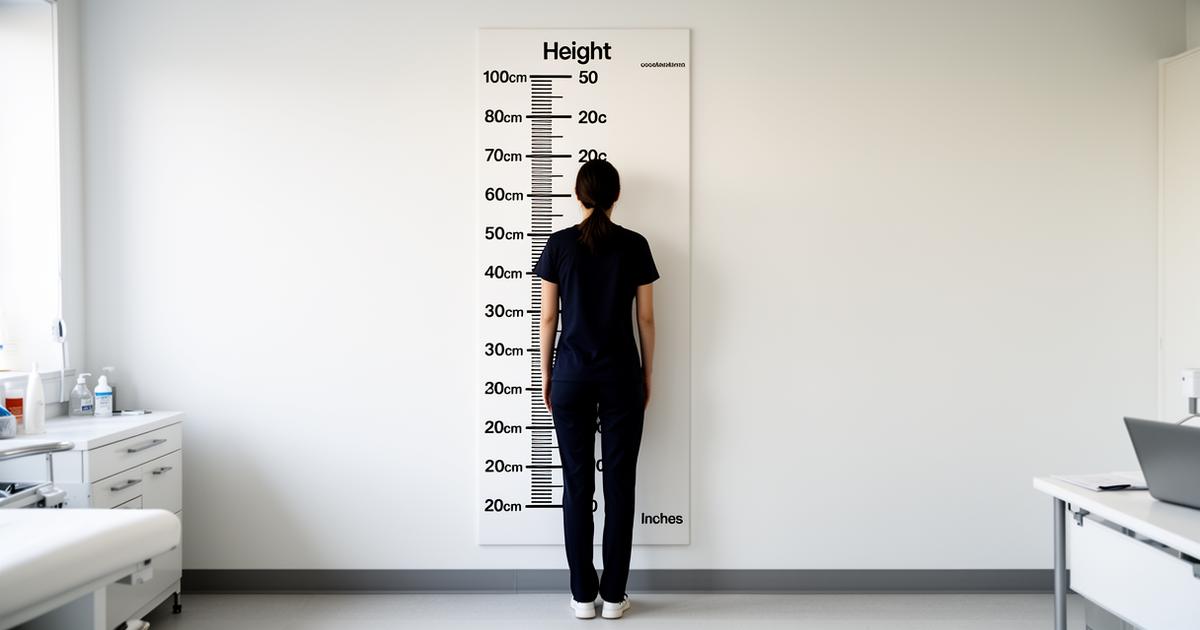
The cm to Inches Formula
The relationship between centimetres and inches is exact and never changes. By international definition, 1 inch = 2.54 centimetres exactly. This single fact gives you both conversion directions:
To convert centimetres to inches: divide by 2.54 To convert inches to centimetres: multiply by 2.54
For example, 30 cm ÷ 2.54 = 11.811 inches. And 6 inches × 2.54 = 15.24 cm.
The factor 2.54 is not a rounded approximation — it is the legally defined value used in all international trade, engineering, and science. Any tool that gives you a different factor for a "more accurate" conversion is simply wrong.
Conversion Formulas
🧮Quick Calculator
1 cm = 0 in
A Quick Mental Estimation Method
Dividing by 2.54 in your head is awkward. A practical approximation that works for everyday use:
Multiply centimetres by 0.4 to get a rough inch value. This is close enough for most non-critical purposes.
For example, 50 cm × 0.4 = 20 inches (exact: 19.69 in). The error is about 1.5%, which is acceptable when you are estimating room dimensions, checking clothing sizes, or visualising a TV screen size.
For greater precision without a calculator: divide by 2.5 instead of 2.54. This gives a slightly high result but is easier arithmetic. 170 cm ÷ 2.5 = 68 inches (exact: 66.93 inches). The error here is about 1.6%.
For exact answers, use the calculator above or the reference chart below.
Mental Estimation
Centimeters to Inches Reference Chart (1–200 cm)
This table covers the most commonly looked-up centimetre values. Heights from 140–200 cm are included in full because these are the most searched range on the internet. All inch values are rounded to two decimal places.
| Centimeters | Inches (decimal) | Inches + fraction |
|---|---|---|
| 1 cm | 0.39 in | 3/8 in |
| 2 cm | 0.79 in | 25/32 in |
| 5 cm | 1.97 in | 1 31/32 in |
| 10 cm | 3.94 in | 3 15/16 in |
| 15 cm | 5.91 in | 5 29/32 in |
| 20 cm | 7.87 in | 7 7/8 in |
| 25 cm | 9.84 in | 9 27/32 in |
| 30 cm | 11.81 in | 11 13/16 in |
| 40 cm | 15.75 in | 15 3/4 in |
| 50 cm | 19.69 in | 19 11/16 in |
| 60 cm | 23.62 in | 23 5/8 in |
| 70 cm | 27.56 in | 27 9/16 in |
| 80 cm | 31.50 in | 31 1/2 in |
| 90 cm | 35.43 in | 35 7/16 in |
| 100 cm | 39.37 in | 39 3/8 in |
| 120 cm | 47.24 in | 47 1/4 in |
| 130 cm | 51.18 in | 51 3/16 in |
| 140 cm | 55.12 in | 55 1/8 in |
| 150 cm | 59.06 in | 59 1/16 in |
| 155 cm | 61.02 in | 61 in |
| 160 cm | 62.99 in | 63 in |
| 162 cm | 63.78 in | 63 3/4 in |
| 165 cm | 64.96 in | 65 in |
| 168 cm | 66.14 in | 66 1/8 in |
| 170 cm | 66.93 in | 66 15/16 in |
| 172 cm | 67.72 in | 67 3/4 in |
| 175 cm | 68.90 in | 68 7/8 in |
| 177 cm | 69.69 in | 69 11/16 in |
| 178 cm | 70.08 in | 70 1/16 in |
| 180 cm | 70.87 in | 70 7/8 in |
| 182 cm | 71.65 in | 71 5/8 in |
| 185 cm | 72.83 in | 72 13/16 in |
| 188 cm | 74.02 in | 74 in |
| 190 cm | 74.80 in | 74 13/16 in |
| 195 cm | 76.77 in | 76 3/4 in |
| 200 cm | 78.74 in | 78 3/4 in |
Try the Calculator
Use our free Centimeters to Inches converter for instant, accurate results.
📏Convert cm → inHuman Height: The Most Searched Conversions
Human height is by far the most common reason people convert between centimetres and inches. Europeans and most of the world state height in centimetres; the United States, United Kingdom, and a few other countries use feet and inches. This creates constant translation need on dating apps, sports databases, medical forms, and social media.
To convert a height from cm to feet and inches, follow two steps: 1. Divide the cm value by 2.54 to get total inches. 2. Divide total inches by 12 to get feet; the remainder is inches.
For example, 170 cm ÷ 2.54 = 66.93 inches. Then 66.93 ÷ 12 = 5 feet with 6.93 inches remaining. So 170 cm = 5 feet 6.93 inches — usually stated as 5′7″ when rounding to the nearest inch.
| Height (cm) | Total Inches | Feet + Inches |
|---|---|---|
| 150 cm | 59.06 in | 4 ft 11 in |
| 155 cm | 61.02 in | 5 ft 1 in |
| 160 cm | 62.99 in | 5 ft 3 in |
| 163 cm | 64.17 in | 5 ft 4 in |
| 165 cm | 64.96 in | 5 ft 5 in |
| 168 cm | 66.14 in | 5 ft 6 in |
| 170 cm | 66.93 in | 5 ft 7 in |
| 172 cm | 67.72 in | 5 ft 8 in |
| 175 cm | 68.90 in | 5 ft 9 in |
| 177 cm | 69.69 in | 5 ft 9 in |
| 178 cm | 70.08 in | 5 ft 10 in |
| 180 cm | 70.87 in | 5 ft 11 in |
| 182 cm | 71.65 in | 5 ft 12 in / 6 ft 0 in |
| 183 cm | 72.05 in | 6 ft 0 in |
| 185 cm | 72.83 in | 6 ft 1 in |
| 188 cm | 74.02 in | 6 ft 2 in |
| 190 cm | 74.80 in | 6 ft 3 in |
| 195 cm | 76.77 in | 6 ft 4 in |
| 200 cm | 78.74 in | 6 ft 7 in |
Real-World Uses Beyond Height
While height is the top search, centimetre-to-inch conversions appear across many other practical contexts:
Clothing and shoe sizes — Online retailers based in Europe or Asia list measurements in centimetres. Chest, waist, and hip measurements in clothing; foot length in shoes; collar sizes in shirts. Converting before ordering saves the hassle of returns.
TV and monitor sizes — Screen sizes are quoted as diagonal measurements. A TV sold in Europe as "139 cm" is marketed in the United States as a 55-inch TV (139 ÷ 2.54 = 54.72 inches). Knowing this equivalence helps when comparing prices across different markets.
Furniture from European manufacturers — IKEA and other European furniture brands often list dimensions in centimetres. A 200 × 90 cm desk is 78.7 × 35.4 inches — useful when checking if it will fit through a door or in a specific space.
Paper and print sizes — A4 paper (21 × 29.7 cm) converts to approximately 8.27 × 11.69 inches. US Letter (8.5 × 11 inches) converts to 21.59 × 27.94 cm. Designers working across both systems need these conversions frequently.
Medical measurements — Body measurements for BMI calculations, wound sizes, tumour dimensions, and foetal measurements are all recorded in centimetres in most countries, then sometimes converted for US-based databases or publications.
Screen Size Reference
Inches to cm: The Reverse Conversion
Converting inches back to centimetres is straightforward: multiply by 2.54. This direction is equally common when reading American product specifications and converting them to metric.
Some widely used inch values to memorise: 6 inches = 15.24 cm | 12 inches (1 foot) = 30.48 cm | 18 inches = 45.72 cm | 24 inches = 60.96 cm | 36 inches (1 yard) = 91.44 cm
For fractional inches — common in US construction and woodworking — convert the fraction to a decimal first. 3/8 inch = 0.375 inches × 2.54 = 0.9525 cm. A 2½-inch screw = 2.5 × 2.54 = 6.35 cm.
Inches → Centimetres
🧮Quick Calculator
1 in = 0 cm

Common Mistakes When Converting cm to Inches
Using the wrong factor is the most common error. Some older conversion charts or informal sources use 2.5 or 0.39 instead of the exact 2.54. For one conversion the difference is small; across multiple conversions in a design or engineering project, errors compound.
Confusing cm and mm is another frequent slip. A measurement of 15 mm is not the same as 15 cm — it is 1.5 cm, and converts to only 0.59 inches rather than 5.91 inches. Always confirm the unit before converting.
Rounding too early can introduce meaningful errors. If you are chaining conversions (cm → inches → feet), carry the full decimal through each step and round only at the final answer. Rounding 170 cm to 67 inches (instead of 66.93) and then dividing by 12 gives 5 feet 7 inches — which happens to be right here, but intermediate rounding does not always cancel out.
Mixing up height notation is also common. "5.7 feet" is not the same as "5 feet 7 inches". 5.7 feet = 5 feet + (0.7 × 12) = 5 feet 8.4 inches. Always be clear about whether you are using decimal feet or feet-and-inches format.
Do Not Use 2.5 as the Conversion Factor
Why Centimetres and Inches Coexist
The centimetre is part of the metric system, which was developed in France in the 1790s and designed around powers of ten. 10 mm = 1 cm, 100 cm = 1 m, 1000 m = 1 km. The clean decimal structure makes calculations simple and is why the metric system is now used by about 95% of the world population.
The inch is part of the imperial system, with roots in ancient Roman and Anglo-Saxon measurement. The word "inch" derives from the Latin uncia, meaning one-twelfth — the same root as "ounce". The inch was standardised across the English-speaking world in 1959 when the United States, United Kingdom, Canada, Australia, and others agreed that 1 inch = 2.54 cm exactly.
Despite the global dominance of metric, the inch remains the standard in the United States for everyday measurements and is still widely used in the UK alongside metric. International commerce, online shopping, and media have made knowing both units increasingly practical for everyone.
International Online Shopping: A Practical Conversion Guide
Cross-border e-commerce has made cm-to-inch conversions a daily necessity for millions of shoppers. Asian manufacturers — particularly from China, South Korea, and Japan — almost exclusively use centimetres for clothing, furniture, and electronics. American and British shoppers need reliable conversions to buy correctly.
Clothing size charts are the most common friction point. A shirt with a 96 cm chest measurement corresponds to approximately 37.8 inches, typically a US/UK size Large or 38. A 76 cm waist is 29.9 inches — a US size 30 waist jean. Understanding that the cm measurement is the actual body measurement (not the garment size) is the first step; then dividing by 2.54 gives the equivalent in inches for comparison with US size charts.
Shoe sizing adds another layer: foot length in centimetres to shoe size varies by brand and country. However, knowing the foot length in cm and inches helps: a 26 cm foot (10.24 inches) corresponds approximately to a US men's size 8 or women's size 9.5. European shoe sizes are based on the interior length of the shoe in Paris points (⅔ cm), making the metric base essential.
Furniture from Scandinavian and European brands — IKEA, BoConcept, Muuto — is specified in centimetres. A 180 × 90 cm dining table is 70.9 × 35.4 inches, approximately 71 × 35 inches. Checking whether this fits through a 32-inch (81.3 cm) door requires knowing both dimensions accurately. A 180 cm table will not fit through a standard 80 cm (31.5-inch) door without removing the legs.
Electronics specifications mix both systems. A phone with a 15.8 cm (6.22-inch) display, a laptop with a 35.6 cm (14-inch) screen, a tablet that is 24.7 cm (9.7 inches) — all are standard ways manufacturers present the same information. Monitor sizes use the diagonal in inches but may list physical dimensions (width × height × depth) in centimetres in the full specifications.
| Clothing Measurement | Centimetres | Inches (approx) | US Size |
|---|---|---|---|
| Chest (S) | 88 cm | 34.6 in | S / 34-35 |
| Chest (M) | 96 cm | 37.8 in | M / 38 |
| Chest (L) | 104 cm | 40.9 in | L / 41 |
| Chest (XL) | 112 cm | 44.1 in | XL / 44 |
| Waist 28 | 71 cm | 28.0 in | 28 |
| Waist 30 | 76 cm | 29.9 in | 30 |
| Waist 32 | 81 cm | 31.9 in | 32 |
| Waist 34 | 86 cm | 33.9 in | 34 |
Paper Sizes, Photography, and Print Design
The publishing and design industries operate across both systems, and understanding the conversions between them prevents expensive reprinting mistakes.
Paper sizes are the most common point of conflict. The international ISO 216 standard uses millimetres: A4 is 210 × 297 mm (21.0 × 29.7 cm), which converts to 8.27 × 11.69 inches. US Letter, by contrast, is 8.5 × 11 inches (21.59 × 27.94 cm). These are close but not identical — a document laid out for A4 will have different margins when printed on US Letter paper, and vice versa. Designers who work for international clients must account for this difference in every document.
A3 paper (29.7 × 42.0 cm = 11.69 × 16.54 inches) is the European equivalent of US Tabloid/Ledger (11 × 17 inches = 27.94 × 43.18 cm). Again, similar but not the same — designs set for A3 cannot simply be printed on Tabloid without checking that nothing is clipped.
Photography sensors and print resolutions use both units. A full-frame camera sensor is approximately 36 × 24 mm (3.6 × 2.4 cm = 1.42 × 0.94 inches). A medium format sensor at 53.7 × 40.2 mm is 5.37 × 4.02 cm (2.11 × 1.58 inches). Print resolution is specified in DPI (dots per inch) — a 300 DPI print means 300 dots per 2.54 cm, so a 20 × 30 cm print at 300 DPI requires an image of (20 ÷ 2.54 × 300) × (30 ÷ 2.54 × 300) = 2362 × 3543 pixels.
Framing and matting in the art world uses inches in the US and centimetres in Europe. A standard 8 × 10-inch print (20.3 × 25.4 cm) fits a standard US frame. The equivalent European standard frame size is 20 × 25 cm (7.87 × 9.84 inches) — close but not the same, so prints ordered in one system may not fit frames purchased in the other without custom cutting.
Key Paper Size Conversions
Engineering and Manufacturing: When Precision Matters
In engineering and manufacturing, the difference between a precise conversion and an approximation can mean the difference between a part that fits and one that does not. The global supply chain routinely requires conversion between metric and imperial tolerances.
The automotive industry illustrates this tension. American car manufacturers historically used SAE (inch-based) fasteners and measurements; Japanese and European manufacturers used metric from the outset. Modern vehicles use both — a single car may have metric body bolts and imperial lug nuts. A mechanic needs to know that a 10 mm bolt head is approximately 0.394 inches (close to 3/8 inch) and that a 13 mm bolt is approximately 0.512 inches (close to 1/2 inch), but these approximations are never used in actual manufacturing.
Metal stock and sheet metal thickness uses different systems in different countries. Steel sheet thickness in the US is specified in gauge (a counter-intuitive system where higher numbers mean thinner sheet: 18 gauge = 0.0478 inches = 1.21 mm, 20 gauge = 0.0359 inches = 0.91 mm). European specifications use millimetres directly. A 2 mm steel plate is 0.0787 inches, close to but not the same as 12 gauge (0.1046 inches).
CNC machining tolerances are routinely specified in thousandths of an inch (thou or mil) or micrometres. 1 thou = 0.001 inches = 0.0254 mm. A tolerance of ±0.005 inches is ±0.127 mm. When working with international subcontractors, converting these precisely prevents out-of-spec parts. Modern CNC machines can be programmed in either metric or imperial units, but the conversion must be exact — not approximated.
Never Approximate in Engineering
How cm and Inches Are Used in Global Sport
Sport simultaneously uses both systems, sometimes within a single event, creating constant conversion needs for journalists, fans, statisticians, and athletes.
Athletics (track and field) events are defined in metric: the 100 m sprint, 400 m hurdles, high jump measured in centimetres, javelin thrown in metres. But US and UK audiences frequently want these in imperial equivalents. Usain Bolt's world record 100 m (9.58 seconds) covers 100 metres = 109.36 yards = 328.08 feet. A 2.45 m high jump world record = 96.46 inches = 8 feet 0.46 inches.
American football, baseball, and basketball are deeply inch-based. A baseball diamond has 90-foot (27.43 m) base paths. A pitcher's mound is 60 feet 6 inches (18.44 m) from home plate. Basketball's three-point arc sits at 23 feet 9 inches (7.24 m) from the basket at the top of the arc. NFL goalposts are 10 feet (304.8 cm) high at the crossbar.
Swimming pool lengths standardise at 50 metres (164 feet 0.5 inches) for Olympic pools, or 25 metres (82 feet 0.25 inches) for short-course pools. In the United States, many recreational pools are 25 yards (75 feet = 22.86 m) rather than 25 metres — creating a 9.14-metre (about 30-foot) difference that significantly affects split times when swimmers compare records across pool types.
Cycling power output is in watts (metric), but frame sizes are quoted in centimetres (or occasionally inches) for the seat tube length. A 56 cm frame is approximately 22 inches. Wheel sizes mix both: 700c wheels (an old French designation approximately 622 mm diameter) are standard for road bikes; mountain bikes use 27.5-inch (584 mm) or 29-inch (622 mm) wheels — the latter being the same diameter as a 700c wheel, just measured in different units.
| Sport Measurement | Metric | Imperial |
|---|---|---|
| Olympic pool length | 50 m | 164 ft 0.5 in |
| Baseball base path | 27.43 m | 90 ft |
| Pitcher's mound distance | 18.44 m | 60 ft 6 in |
| NBA 3-point line (top) | 7.24 m | 23 ft 9 in |
| Basketball rim height | 3.05 m | 10 ft 0 in |
| Men's high jump WR | 2.45 m | 8 ft 0.5 in |
| NFL goal post crossbar | 3.05 m | 10 ft 0 in |
| Football field length | 91.44 m | 100 yd / 300 ft |